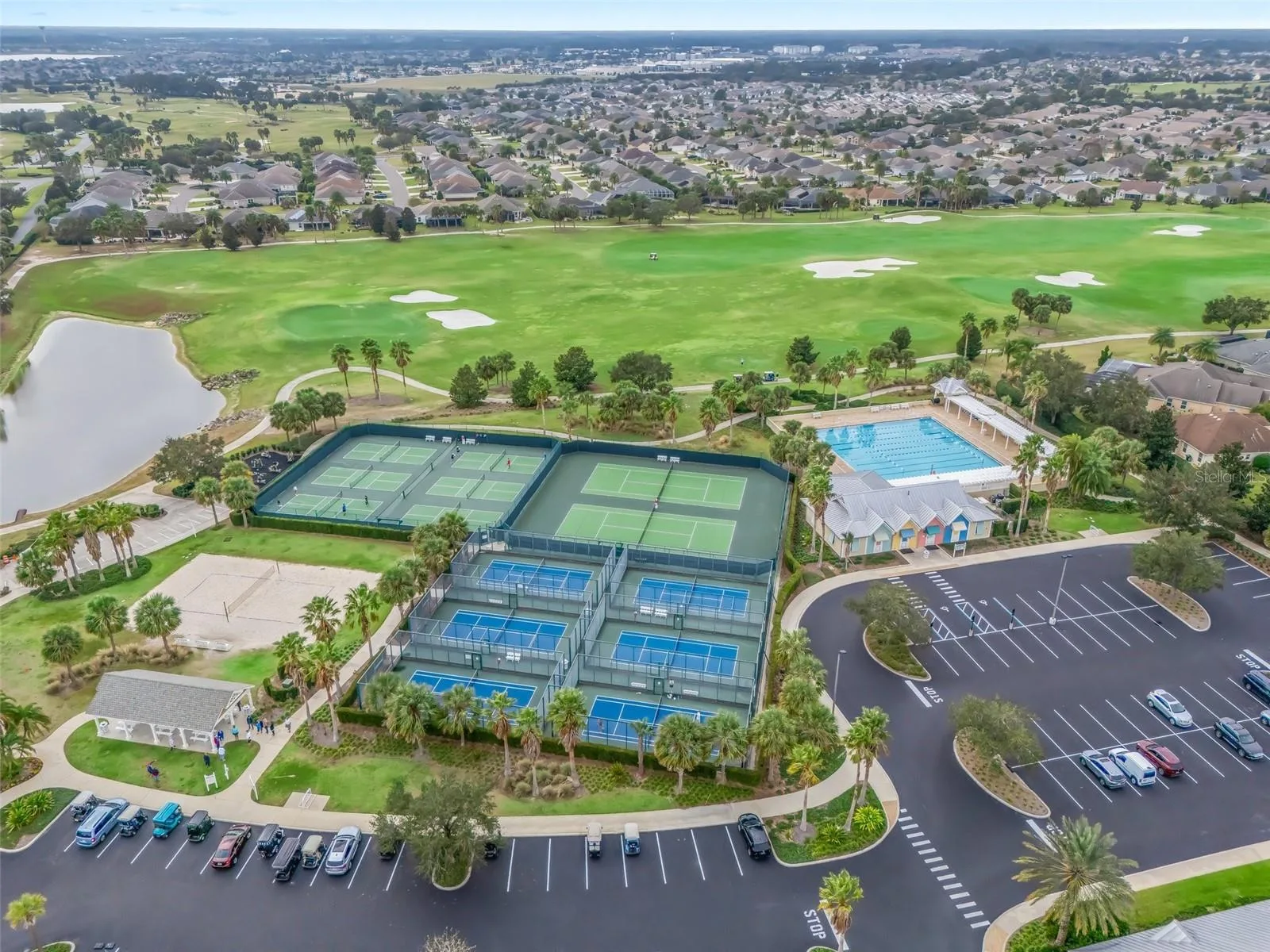
Aerial view of a community with tennis and pickleball courts, a pool, and a golf course

Investor FAQ

The questions investors actually ask

Everything an investor in The Villages wants to know in one place: whether you can rent, the seasonal and annual models, the real carrying costs, taxes, financing, and the buying process. The answers stay general and verified, because the numbers that matter belong on a specific property with your own advisors.

The rental model

How renting works for investors

01

Can you rent out a home in The Villages?

Yes. Renting is an established practice here, and owners routinely rent homes they do not live in. Two models dominate: seasonal rentals, a furnished home leased for a block of months, most often over the winter, and annual leases, typically 12 months and often unfurnished. Each village's deed restrictions set the minimum lease terms, commonly around 30 days, with some villages requiring longer. Nightly, short-term rentals are generally not permitted.

02

How do seasonal and annual rentals compare for an investor?

Pick the model before the property list. Seasonal favors compact, furnished-friendly homes that turn over fast between winter guests: it means cleaning, restocking, and guest communication between every stay, with peak demand over the snowbird season. Annual favors space and a real yard, with steadier occupancy, fewer turnovers, and one primary tenant to serve. Most investors run one model well rather than both at once.

03

Do I have to live there to own a rental?

No. Investors buy and rent out homes here all the time, and the seasonal and annual models were built for owners who live elsewhere. The 55+ rule applies to the people living in the home, not to the owner: at least one occupant must be 55 or older under the federal Housing for Older Persons Act, and other occupants are generally 19 or older.

04

Who actually rents these homes?

Snowbirds first: northern retirees who come for the mild winters, often staying three to six months, and many of them return year after year. Future residents are the second group, people who rent before they buy to try the lifestyle. Renters register with the village and typically receive temporary resident passes that grant access to the amenities, which is a big part of the draw.

05

What does owning from out of state really require?

A plan, made before you buy: a local property manager or a trusted vendor team for cleaning, lawn, repairs, and guest communication; a budget for the gap between guests and for maintenance; and written leases that follow Florida landlord-tenant law. Owners who stay reachable, with video calls, photos, and clear checklists, keep a long-distance rental in control.

Costs and carrying costs

What an investor actually pays

01

Is there an HOA in The Villages?

No traditional HOA: no HOA dues and no conventional HOA board. The community is deed-restricted, with village-level property owners' associations that enforce the rules, and residents pay a monthly amenities fee of about $204 per home. The fee stays with the property and transfers when it sells, and the exact amount can vary by home and over time.

02

What does the monthly amenities fee cover?

Recreation centers, swimming pools, fitness facilities, tennis and pickleball courts, clubs and activities, entertainment at the town squares, and common-area upkeep. For an investor, the fee is the predictable part of the budget; property taxes, insurance, and utilities vary with the home, the county, and the year.

03

What are the real carrying costs beyond the fee?

County-set property taxes, and a rental home does not qualify for the Florida homestead exemption, so no owner-occupied break applies. Florida property insurance is a significant line item: wind, flood in some zones, liability, and landlord coverage. Then maintenance and turnover: appliances, air conditioning upkeep, lawn care, pest control, and cleaning between tenants. A cash buffer for vacancy and the quiet months turns a good plan into a resilient one.

04

How are taxes handled on a rental property?

Rental income is taxable income, on top of whatever other income you have. Depreciation can offset income while you hold the property, and it can trigger depreciation recapture when you sell. Deductions, limits, and rules change, and your numbers are your numbers, so bring the whole plan to a CPA who knows Florida rental property before you close.

05

How much income can I expect?

This guide deliberately gives no rental income or price estimates, because results vary by property, location, and management, and the figures change with the market. What is verifiable: the demand is real, the seasonal and annual models are established, and each village's rules shape what a property can do. A local agent can pull current market data for the specific homes you are considering.

Financing and buying

The purchase, step by step

01

How does financing differ for an investment purchase?

Lenders treat a rental as a business: different rates, larger down payments, and stricter underwriting than a loan on a home you will live in. Get pre-approved before you shop, and tell the lender the home will be a rental, because it changes the terms. If you buy cash, the question shifts to carrying costs: the amenities fee, taxes, insurance, and upkeep that run every month either way.

02

What is the buying process for an investor?

Seven steps, in order: choose your property type, match it to a rental plan, pick your areas across Marion, Sumter, and Lake counties, build your team (lender, buyer's agent, inspector, title company or attorney, and property manager), complete due diligence on the amenities fee, deed restrictions, lease terms, taxes, and insurance, make an offer and close, then prepare the home to rent. Much of it can run remotely.

03

Which property types work best for investors?

The five types are patio villas, courtyard villas, villas, single-family homes, and bare lots. Entry villas are quick to furnish, easy to clean between guests, and in steady demand from seasonal renters. Single-family homes offer more space and a real yard, which appeals to annual tenants, at a higher entry cost. Bare lots are a longer horizon: a lot produces no rental income until a home is built on it.

04

What lease rules apply in each village?

Deed restrictions set the rules, and they vary village by village: minimum lease terms, commonly around 30 days with some villages requiring longer, plus registration and temporary resident passes for renters. Nightly, short-term rentals are generally not permitted. Your agent and attorney can pull the exact restrictions for the home you are considering before you commit.

05

Can international buyers invest in The Villages?

Yes. Lili works with local, national, and international clients and is bilingual in English and Spanish. Financing, taxes, and title steps differ for international buyers, so plan for them early with your advisors; the purchase itself is the same process, and most of it can be handled remotely.

Working with Lili

Why buy with a local broker

01

Why work with a local agent who knows the district rules?

Because the rules, taxes, and inventory differ from village to village and county to county. Lili is a broker associate with Soundings LLC, licensed in Florida at BK3090328 with Stellar MLS, and has worked The Villages and Central Florida for more than 20 years with over 450 homes sold. She can pull current market data, verify each village's rules, and introduce you to local managers and vendors, in English or Spanish.

02

How do I get started?

Bring your questions to a free first conversation. Call 352-715-3514 or book a call on Calendly, and come ready to talk about the rental model you are considering, the areas you are watching, and where you are in your plan.

Go deeper

The full guide for Villages investors

Every answer above has a full chapter behind it. Start where your plan is thinnest.

Bring your plan to someone local

Lili answers every inquiry personally, in English or Spanish, and she knows the rules district by district across Marion, Sumter, and Lake counties.

Looking for the retiree and first-time buyer questions instead? See the Buyer & Resident FAQ .

Book a call